
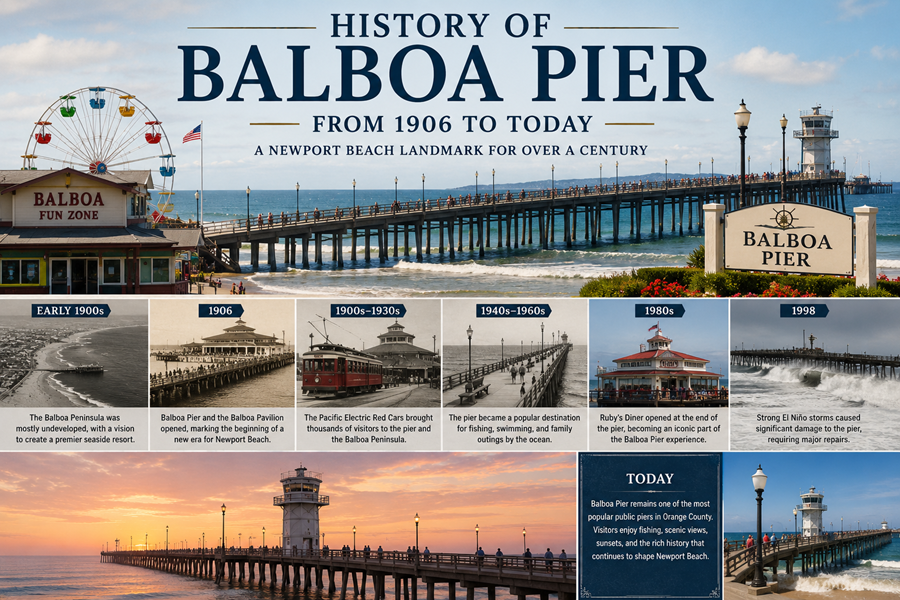
Balboa Pier has been one of Newport Beach's defining landmarks for more than a century. Since opening in 1906, it has welcomed millions of visitors, fishermen, surfers, photographers, and local residents while helping transform the Balboa Peninsula into one of Southern California's best-known beach destinations.
The history of the pier is closely connected with the development of Newport Beach, the construction of the Balboa Pavilion, and the arrival of the famous Pacific Electric Red Cars that brought thousands of visitors to the coast during the early twentieth century.
The Beginning of Balboa Pier
At the beginning of the twentieth century, much of the Balboa Peninsula consisted of undeveloped coastal land. Investors believed the area had enormous potential as a seaside resort but needed attractions and transportation to encourage people to visit and purchase property.
To achieve this goal, the Newport Bay Investment Company launched two ambitious projects that would permanently shape the future of Newport Beach: the construction of the Balboa Pavilion and Balboa Pier.
Construction in 1906
Balboa Pier officially opened in 1906. The structure was built almost entirely from timber and extended hundreds of feet into the Pacific Ocean, providing easy access for visitors, recreational fishing, sightseeing, and ocean recreation.
From the beginning, the pier was designed to be more than a fishing platform. It became a destination where visitors could enjoy fresh ocean air, panoramic coastal views, and the growing beach community developing around it.
The Arrival of the Pacific Electric Red Cars
The opening of Balboa Pier coincided with the extension of the Pacific Electric Railway to the Balboa Peninsula. The famous Red Cars connected Long Beach and Los Angeles with Newport Beach, allowing thousands of Southern California residents to reach the coast without needing an automobile.
The combination of convenient transportation, the Balboa Pavilion, and the new pier quickly attracted tourists and encouraged real estate development throughout the peninsula.
The Balboa Pavilion Connection
Built during the same year, the Balboa Pavilion became the architectural centerpiece of the waterfront. Together, the pavilion and the pier formed the heart of the new seaside community.
For more than one hundred years, both landmarks have remained among the most recognizable historic buildings in Newport Beach and continue to attract visitors from around the world.
A Growing Beach Destination
Throughout the early decades of the twentieth century, Balboa Pier became increasingly popular with anglers, families, swimmers, and vacationers. Hotels, restaurants, shops, and recreational businesses gradually expanded around the waterfront, creating the lively atmosphere that still exists today.
Fishing became one of the pier's defining activities, with visitors catching species including mackerel, halibut, bonito, croaker, rays, and other fish commonly found along the Southern California coast.
Storm Damage and Restoration
Like many California piers, Balboa Pier has experienced damage from powerful Pacific storms over the years. One of the most significant events occurred during the strong El Niño winter storms of 1998.
Large waves damaged part of the structure and several support pilings required extensive repairs. Reinforced steel supports were later added to improve the pier's long-term durability while preserving its historic appearance.
Ruby's Diner Era
During the 1980s, the first Orange County location of Ruby's Diner opened at the end of Balboa Pier. The classic American-style restaurant quickly became one of the most recognizable features of the pier and welcomed visitors for decades.
The restaurant contributed to the pier's popularity by combining ocean views with a nostalgic dining experience overlooking the Pacific Ocean.
Balboa Pier Today
More than a century after opening, Balboa Pier remains one of the busiest public piers in Orange County. Visitors continue to come for fishing, walking, surfing, sightseeing, photography, and enjoying sunsets over the Pacific.
The surrounding Balboa Peninsula has grown into a vibrant coastal destination featuring beaches, restaurants, the Balboa Fun Zone, the Balboa Pavilion, harbor cruises, whale-watching tours, and the Balboa Island Ferry.
Why Balboa Pier Remains Important
Balboa Pier is more than a historic structure. It represents the beginning of modern Newport Beach and the vision that transformed a quiet stretch of sand into one of California's best-known coastal communities.
Although the city has changed dramatically since 1906, the pier continues to serve the same purpose it did more than one hundred years ago—bringing people together to enjoy the Pacific Ocean.